







Here’s something most people never think about:
Not all essential oils are distilled for the same amount of time.
And that one detail—something you’ll never see on a label—can quietly change how an oil smells, feels, and performs in your space.
If you’ve ever had two bottles of the same oil that felt slightly different, distillation time might be part of the story.
The Simple Version (Without Getting Too Technical)
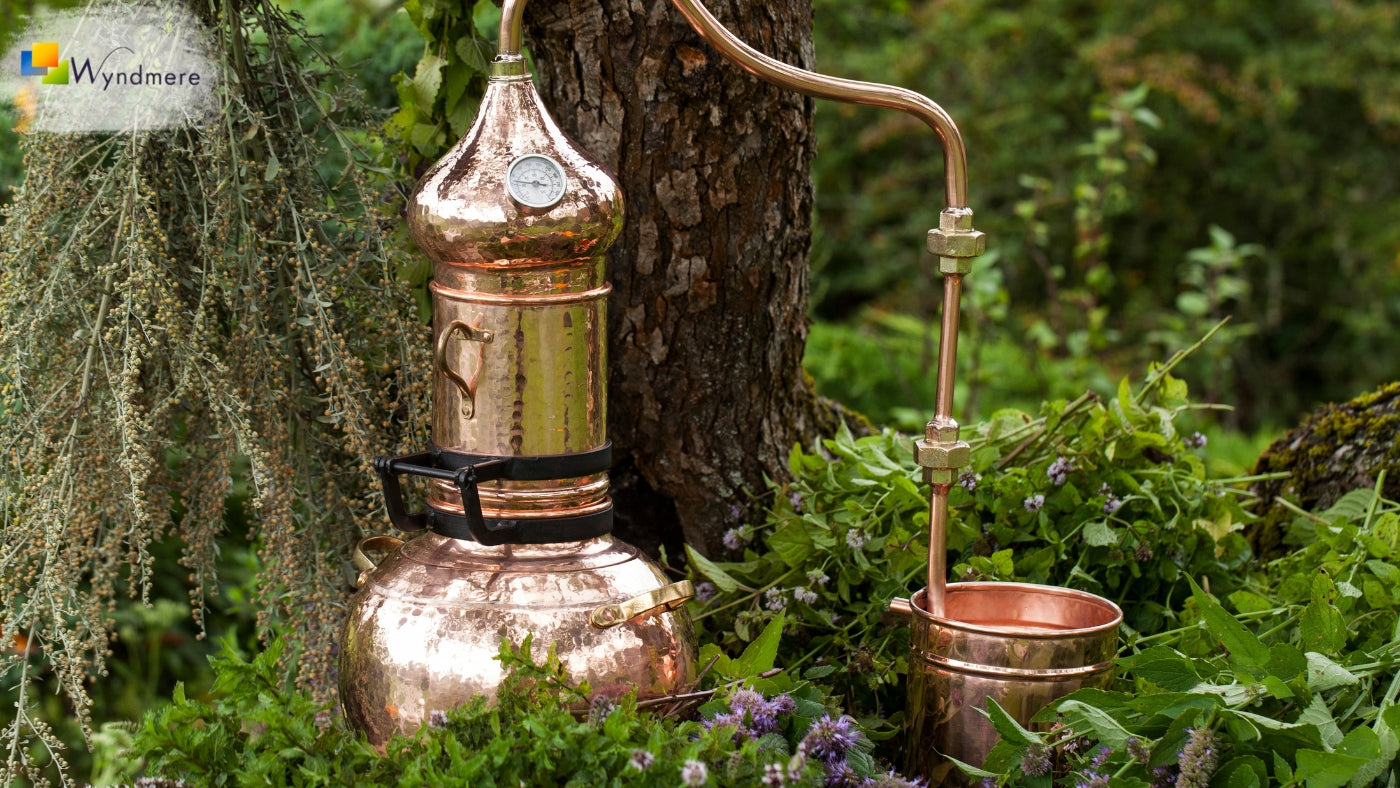
Distillation is the process used to extract essential oil from plant material, usually using steam.
Think of it like this:
Steam passes through the plant → it carries the aromatic compounds → those compounds are collected and separated into essential oil.
But here’s the key:
How long that process runs matters.
A lot.
Short Distillation vs. Long Distillation
Let’s break it down in a way that actually makes sense.
A shorter distillation tends to capture the lighter, more delicate parts of the plant.
A longer distillation pulls out deeper, heavier components that take more time to release.
So depending on how long the distillation runs, you can end up with oils that feel noticeably different.
What a Shorter Distillation Might Feel Like
When distillation is shorter, the oil often comes across as:
- Brighter
- Lighter
- More fresh or crisp
- Sometimes a bit more “top note” forward
These oils can feel airy and clean—like opening a window on a mild day.
Some people naturally prefer this style because it feels more subtle and easy to blend into everyday routines.
What a Longer Distillation Might Feel Like
When distillation runs longer, more of the plant’s heavier compounds are extracted.
This can lead to an oil that feels:
- Deeper
- Richer
- More grounded
- Sometimes slightly stronger or more complex
It’s not necessarily more intense in a harsh way—it just has more depth.
Think of it like steeping tea longer. You’re pulling out more layers.
Why Not Just Distill Everything the Same Way?
This is where it gets interesting.
There’s no single “correct” distillation time for every plant.
Different plants release their aromatic compounds at different rates.
Some give up their oils quickly.
Others take time.
So distillers make decisions based on:
- The type of plant
- The desired scent profile
- The balance they’re trying to achieve
In other words, distillation isn’t just a process—it’s a bit of an art.
The Trade-Off Most People Don’t See
Here’s something that often gets overlooked:
A shorter distillation might produce less oil overall—but with a lighter scent.
A longer distillation might produce more oil—but with a heavier profile.
So there’s always a balance between:
- Quantity
- Scent character
- Overall feel of the oil
Different producers may choose different approaches depending on what they value.
Why This Explains Differences Between Brands
If you’ve ever smelled the same oil from two different brands and thought,
“Why does this one feel softer?”
or
“Why is this one stronger or more earthy?”
Distillation time could be a major factor.
Even if everything else is the same—the plant, the region, the harvest—the way it’s distilled can shift the final result.
It’s Not About Better or Worse
This is important.
Longer distillation doesn’t automatically mean higher quality.
Shorter distillation doesn’t mean lower quality.
They’re just different approaches.
Some people prefer oils that feel light and bright.
Others prefer oils with more depth and complexity.
There’s no universal “best”—only what fits your preferences and your space.
A Simple Way to Notice the Difference
If you’re curious, try this:
Smell an oil and pay attention to how it unfolds.
- Does it feel immediate and crisp?
- Does it deepen over a few seconds?
- Does it feel light or more grounded?
You don’t need to analyze it deeply—just notice.
That alone can help you understand what you’re drawn to.
How This Shows Up in Everyday Use
In practical terms, distillation time can influence how you use an oil.
You might find that:
- Lighter oils feel great during the day or in open spaces
- Deeper oils feel more grounding in the evening or in quieter settings
Again, not a rule—just something you might naturally notice over time.
Most People Expect Consistency—But This Is Part of the Variation
We’re used to products being identical every time.
But essential oils aren’t standardized in the same way.
Distillation time is just one of many variables that can shift slightly from batch to batch or from one producer to another.
And that’s part of working with something that comes from nature, not a formula.
Bringing It Back to What Actually Matters
At the end of the day, you don’t need to know the exact distillation time of your oils.
What matters is simpler than that:
Do you enjoy the scent?
Does it feel right in your space?
Does it fit into your routine?
That’s really it.
A Gentle Final Thought
There’s a lot happening behind that small bottle—more than most people realize.
Distillation time is one of those quiet factors that shapes the final oil in subtle but meaningful ways.
And once you start to notice it, you may find yourself appreciating those differences a little more.
Not as inconsistencies.
But as variations—small shifts that make each oil feel just a little bit unique.






Leave a comment (all fields required)